

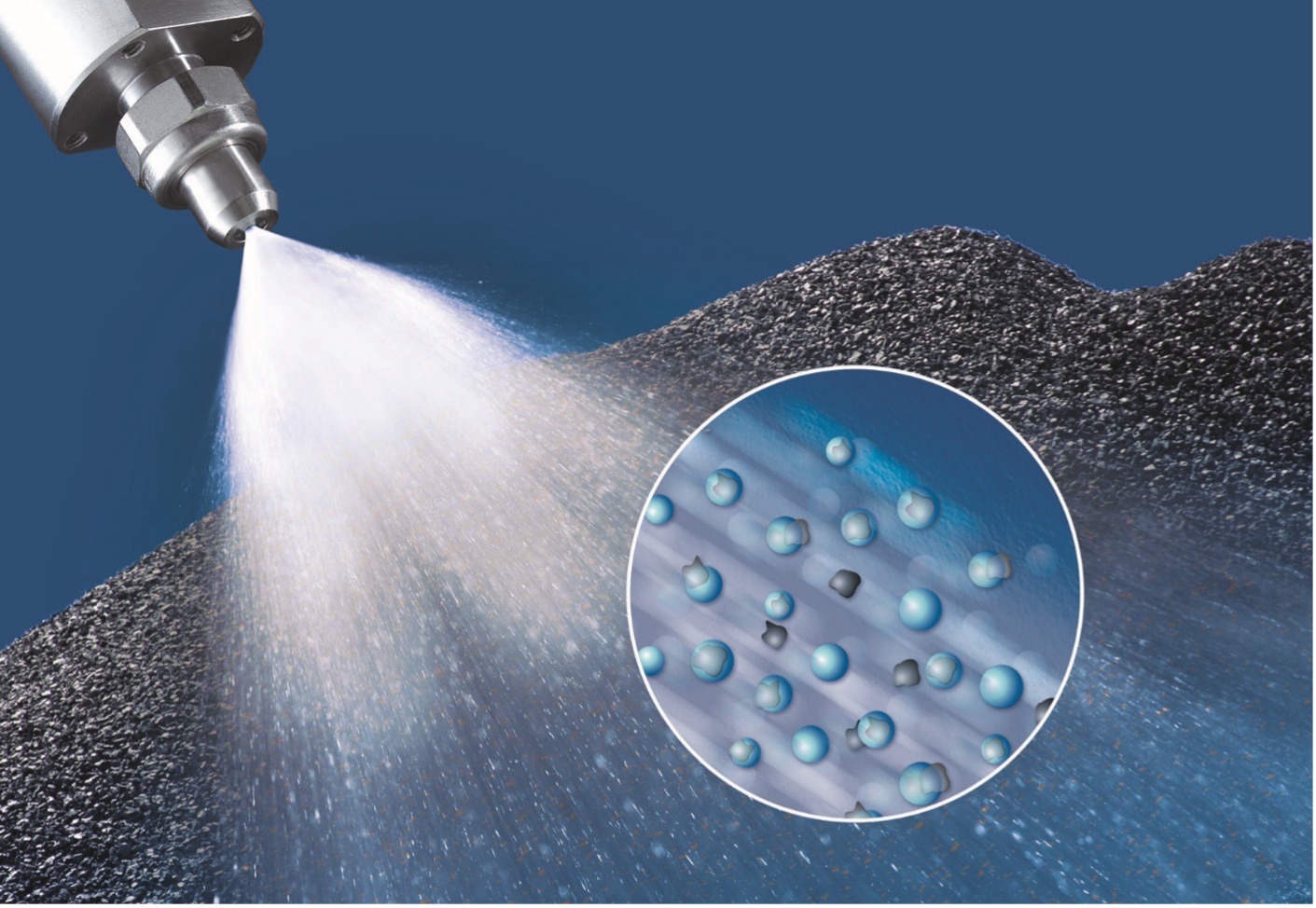
Dust suppression nozzles and systems that work
Can I really reduce dust with wet dust suppression systems?
Yes – and the results are proven. A major bulk-handling equipment manufacturer installed a precision spray system to control iron-ore dust during rail-car unloading. Customers previously faced health risks for workers and significant environmental fines that could reach thousands of Rands annually.
The new system dust suppression system completely eliminated visible dust, ensured regulatory compliance, created a safer workplace, and removed the need for expensive compressed air. In water-scarce South Africa, these dust suppression nozzles also minimise water use by delivering exactly the right droplet size and volume. The payback is fast, fines are avoided, and operations stay compliant – exactly what local mining and material-handling plants need under strict environmental and health regulations.
What exactly does the solution entail, which nozzles are used, and why is it optimal?
Monitor Engineering (www.monitorspray.co.za), sole agent in Southern Africa since 1950 for Spraying Systems Co , the world leader in Spray Technology .supplies complete, ready-to-install dust suppression systems (pumps, filtration, spray bars, controls and dust suppression nozzles) after a free site audit. The solution follows best-practice principles: atomisation into fine droplets, correct nozzle selection and placement, precise water-pressure and flow control, automation where possible, and regular maintenance
The optimal nozzles for most South African applications are WhirlJet® hollow-cone nozzles or hydraulic fine spray nozzles such as FogJet® / LN Series for ultra-fine mist . https://monitorspray.co.za/products/
- They produce the ideal droplet sizes (20–200 µm) proven to capture airborne dust particles through atomisation – dramatically increasing surface area so each drop collides with and weighs down multiple dust particles.
- Large free passages resist clogging even with dirty or recycled water.
- They deliver uniform coverage without compressed air, slashing operating costs compared with air-atomising systems.
- Quick-connect tips and built-in strainers make maintenance fast.
In the Brazilian bulk-handling case (now replicated on many South African sites), a combination of FullJet® full-cone, VeeJet® flat-spray and fine-spray nozzles on three manifolds achieved perfect suppression at transfer and unloading points. The system fits existing conveyors, crushers, stockpiles or tipplers with no major pipework changes and integrates with dust sensors for automated on-demand spraying.
What different types of spray nozzles are commonly used in the South African dust suppression and mining industry, and what does each type do best?
South African operations use these specialised nozzles (all stocked and supported locally by Monitor Spray) to match the exact requirements of dust prevention (wetting material before it becomes airborne) and dust suppression (capturing already-airborne particles):
- Hollow-cone nozzles (WhirlJet® & SpiralJet®) – Best for transfer points, crushers, ROM bins and stockpiles. They create a uniform circular pattern with small-to-medium drops and large orifices that handle dirty water without clogging – ideal for atomisation and broad-area coverage.
• Flat-spray nozzles (VeeJet® & FlatJet®) – Perfect for high-impact wetting on conveyors, chutes and load-outs. They deliver even flat patterns with medium drops for thorough material penetration and minimal water use.
• Full-cone spray nozzles (FullJet® & SpiralJet®) – Excellent for prevention at stackers, reclaimers and dumping zones. They produce medium-to-large drops over a wide area with high velocity, ensuring deep wetting even when nozzles are mounted at a distance.
• Air-atomising and fine-spray nozzles (J-Series, FogJet®) – The choice for true airborne suppression in enclosed areas, underground mines or ship loaders. They generate ultra-fine mist (10–150 µm) that capture the smallest particles with the lowest water consumption and can be automated with sensors.
All dust suppression nozzles are selected for droplet size, spray angle, flow rate and placement exactly as recommended by Monitor Engineering’s’ dust control experts– ensuring maximum dust capture while minimising water, energy and maintenance. Automation, strainers and quick-change tips further extend performance and reduce costs.
Why should South African mining operators contact Monitor Spray at www.monitorspray.co.za right now?
Because a no-charge site audit from Monitor Engineering can show you exactly how to solve your dust suppression problems, and how much water and money you can save – and deliver a custom system with payback often measured in weeks, not years. As the sole Southern African agent for Spraying Systems Co. since 1950, we focus 100 % on spray technology and have helped local mines avoid millions in fines while cutting water and operating costs.
Our factory-trained engineers (Johannesburg head office plus branches in KZN, Cape Town, North West, Limpopo, Northern Cape and neighbouring countries) will visit your site at no cost, audit dust levels, test your current setup, calculate exact Rand savings and design the optimal dust suppression system with automation if needed. We stock everything locally for fast delivery and support.
One targeted upgrade can protect your workers, keep you fully compliant, slash water use and add thousands of Rand to your bottom line every year.
Call 011 618 3860 or email sales3@monitorspray.co.za today. Visit www.monitorspray.co.za to download the free Spray Technology for Dust Control Guide (B652A) and the full case study. Don’t let dust keep costing you millions – contact Monitor Spray now and start suppressing dust the smart, cost-saving way.
Solving your spray applications since 1950