

The top 5 Dust Suppression Spray Nozzles
- Full Cone Spray Nozzles (FullJet) These produce a solid, circular spray pattern with medium-to-large droplets (typically 100–500+ µm). They excel at open-air or high-volume wetting for coarser dust, stockpiles, haul roads, crusher discharges, and transfer points where drift resistance and broad coverage are needed. They provide good penetration into dust clouds but use more water and are less ideal for very fine airborne particles.
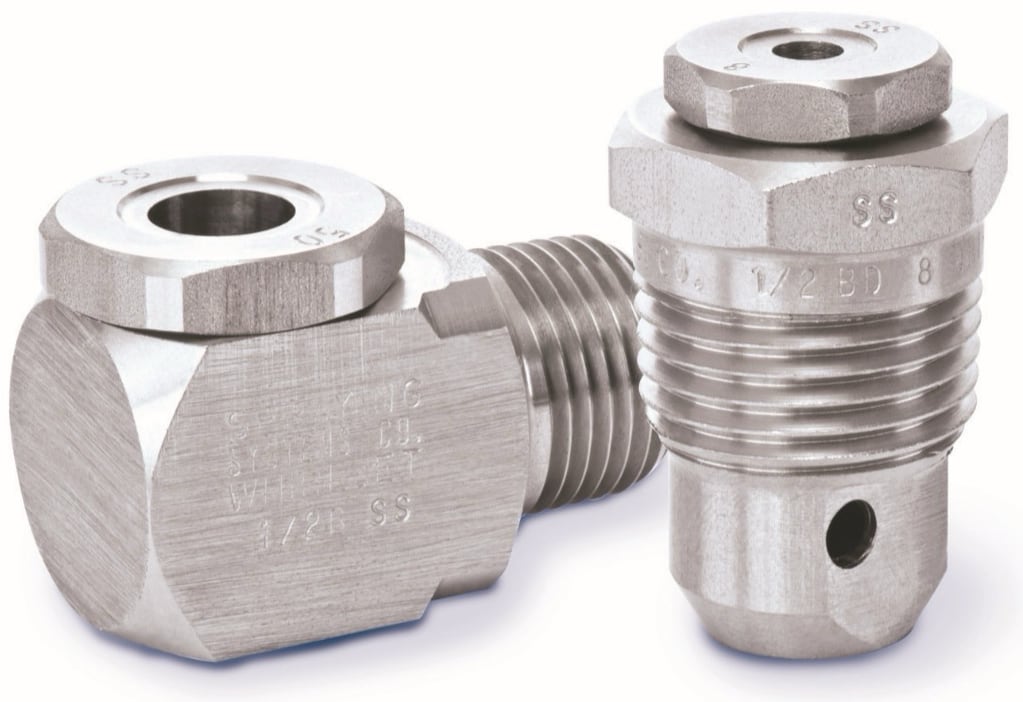
- Hollow Cone Dust Suppression Nozzles (e.g., WhirlJet or SpiralJet types) These create a ring-shaped (hollow) spray with fine-to-medium droplets and larger orifices to reduce clogging. They are highly effective for airborne dust suppression in dispersed areas like transfer points, crushers, stackers, and reclaimers. The pattern maximizes gas-liquid contact and works well for both prevention and suppression.
- Fog/Mist Dust Suppression Spray Nozzles (including Hydraulic Fine Spray) These generate ultra-fine droplets (30–100 µm or smaller) for excellent capture of respirable dust (PM2.5/PM10) in enclosed or semi-enclosed spaces like crushers, hoppers, and conveyor enclosures. They use low water volumes and are efficient for fine particle agglomeration, though they can drift in windy open areas.
- Air Atomizing Dust Suppression Nozzles (or dry fog) Using compressed air and water, these produce the finest droplets (often <50 µm) with high control over drop size distribution. They are top-tier for precision ultra-fine dust suppression in enclosed areas, odor control, or where minimal water addition is critical. They outperform hydraulic options for very fine dust but require an air supply.
- Flat Fan Spray Nozzles (e.g. VeeJet types) These deliver a flat flat, shaped spray (narrow to wide angles) with medium droplets for targeted applications like conveyor belts, loading zones, chutes, or surface wetting. They provide strong impact and edge-to-edge coverage in linear or rectangular areas but are less optimal for broad airborne capture.
Top 5 Factors in Dust Suppression Nozzle Selection
- Droplet size matching: Finer droplets (fog/mist/air atomizing) best capture fine airborne dust; coarser ones (full cone/flat fan) wet surfaces and heavier particles. Optimal range for airborne suppression is often 20–200 µm.
- Hydraulic vs. Air-Atomizing: Hydraulic nozzles (cheaper, simpler) dominate; air-atomizing offers smaller drop sizes where air is available.
- Applications often require a combination of dust suppression nozzle types: Fullcone nozzles for dust prevention, and finer atomizing spray nozzles for dust suppression( capture of airborne dust)
- Water quality , will determine the type of nozzle selected . Poor water quality will require a non clog type of spray nozzle.
- High vs Low pressure : High pressure equals smaller drop sizes, but also require higher pressure pumps which can increase dust suppression system costs
Contact our dust suppression experts for your no charge dust suppression site audit. We have been assisting companies like yourselves solve dust problems since 1950
Selection depends on dust type/particle size, environment (open vs. enclosed), wind, water quality/availability, and clogging risks. Consult manufacturers (e.g., Spraying Systems Co.) for site-specific performance data.