

What are dust suppression systems?
And why correct dust suppression nozzle selection plays an important role
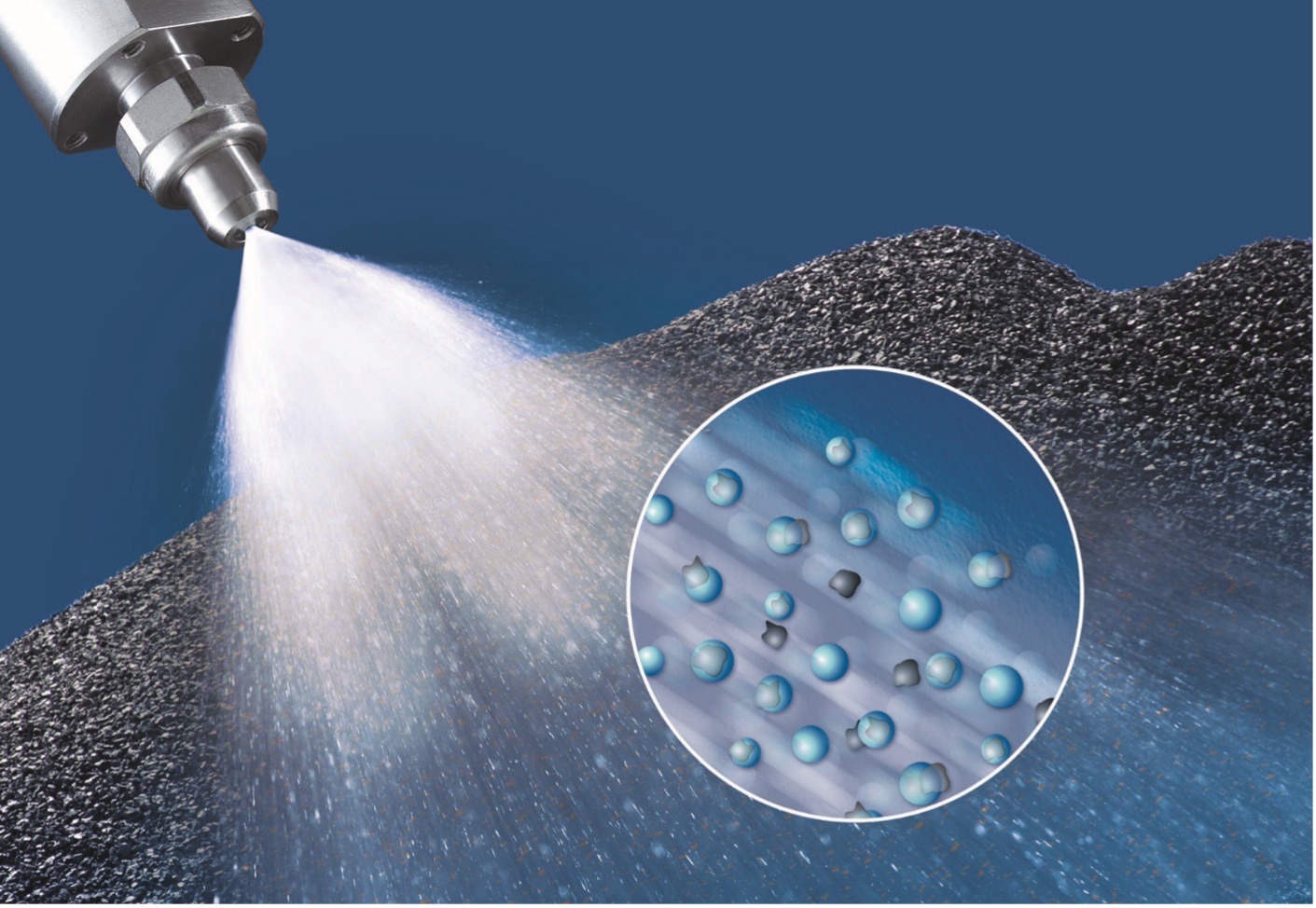
Dust suppression systems are engineered solutions that control fugitive dust particles in the air using either wet or dry methods. Wet systems (the focus for most South African operations) spray fine droplets of water or dust suppressants that bind to dust particles, increase their weight and bring them safely back to the ground – creating a dust-free environment without creating mud or over-wetting material.
In South Africa’s water-scarce environment, the savings are substantial. A single well-designed system can eliminate dust during rail-car unloading or conveyor transfer, helping plants avoid environmental fines that can reach thousands of Rands per year.
Additional savings come from dramatically reduced water consumption (by using the right droplet size instead of wasteful flooding), lower wastewater treatment costs, fewer health-related claims (silicosis and respiratory diseases), less equipment wear and higher productivity. Many mines and plants see full payback in months while meeting strict occupational health and environmental regulations.
What exactly does the solution entail, which dust suppression nozzle is used, and why is it optimal?
Monitor Spray , (www.monitorspray.co.za) sole agents for Sprayings Systems Co since 1950 ,designs complete wet dust suppression systems (nozzles, spray bars, pumps, filtration and controls) after a free site audit. The solution uses misting or fogging nozzles to create the precise droplets described in the science of wet suppression – droplets under 100 microns, ideally 10–50 microns, that bind with dust on impact .
The optimal dust suppression nozzles for the systems outlined are WhirlJet® hollow-cone nozzles (hydraulic misting) ,FogJet® and air-atomising nozzles (for true dry fog).
These are chosen because they deliver exactly the droplet sizes needed for effective binding while using far less water than dust control nozzles.
WhirlJet® nozzles create a uniform circular pattern with large free passages that handle dirty or recycled water without clogging. FogJet® models produce the ultra-fine mist (10–50 µm) required for airborne dust capture and can be automated with sensors for on-demand operation only. Both fit existing pipework, integrate with chemical dosing for “making water work” (surfactants/polymers), and prevent over-wetting of product or machinery – delivering the water savings and performance the document highlights.
What different types of dust suppression nozzles are commonly used in dust control in South Africa, and what does each type do best?
Monitor Spray supplies the full range of specialised nozzles (all from Spraying Systems Co.) to match every dust prevention and suppression need:
- Air-atomising nozzles – Produce the finest droplets (dry fog) for capturing already-airborne dust in enclosed areas, crushers and loading terminals. Ideal when maximum efficiency and minimal water use are required.
- Hydraulic fine-spray nozzles (FogJet) – Deliver very small droplets in a controlled circular pattern. Perfect for stackers, reclaimers and transfer points where light misting prevents dust without wetting the material.
- Hollow-cone nozzles (WhirlJet®) – Create a uniform ring-shaped spray with small-to-medium drops and large orifices. Excellent for transfer points, ROM bins, crushers and haul roads – handles dirty water and provides broad coverage.
- Flat-spray nozzles (VeeJet® & FlatJet®) – Give high-impact, even rectangular coverage. Best for conveyors, chutes and stockpiles where targeted wetting of surfaces stops dust at source.
- Full-cone nozzles (FullJet®) – Generate medium-to-large drops over a wide area. Used when nozzles are mounted far from the dust source (dumping zones, large stockpiles) for deep penetration.
All nozzles are selected for the exact droplet size, spray angle and flow rate needed to achieve the binding effect described, while minimising water use and complying with South African environmental standards.
Why should South African mining and industrial operators contact Monitor Spray at www.monitorspray.co.za right now?
Because a free site audit from Monitor Engineering can show you exactly how we can help solve your dust control applications – and deliver a custom wet dust suppression system with payback often in months . As the sole Southern African agent for Spraying Systems Co. since 1950, we focus 100 % on spray technology and have helped local mines avoid thousands in fines while slashing water and operating costs.
Our factory-trained engineers (Johannesburg head office plus branches countrywide) will visit your site at no charge, observe dust levels, calculate a tailor made solution for your application , and reduce your dust levels .
One targeted upgrade to your dust suppression systems can protect your workers from silicosis, keep you fully compliant, cut water use dramatically and add millions of Rand to your bottom line every year.
Call 011 618 3860 or email sales3@monitorspray.co.za today. Visit www.monitorspray.co.za to download the free Spray Technology for Dust Control Guide and request your no-obligation audit. Don’t let dust keep costing you thousands – contact Monitor Spray now and start suppressing dust the smart, cost-saving way.